Medical Education Cluster

Medical Education Cluster
Medical Education Cluster
Cluster Overview
The Medical Education Cluster brings together researchers dedicated to advancing understanding of how veterinary students acquire knowledge and professional competencies, how educators facilitate that development, and how curricula support the formation of competent, compassionate veterinarians who go on to achieve successful and fulfilling lifelong careers. Through both qualitative and quantitative approaches, our researchers conduct essential veterinary education research that informs evidence-based teaching practices. This work ensures that future veterinarians develop the clinical competence, critical thinking, and professional skills needed to meet evolving animal health and societal needs. We also recognize the many additional faculty, staff, students, and collaborators whose contributions support the cluster's broader research mission.
Core Research Themes
- Professional Identity Formation: Exploring how students develop their sense of professional self, values, and roles within the veterinary profession, their education and early careers.
- Clinical Reasoning and Decision-Making: Investigating how learners acquire and apply diagnostic thinking, problem-solving skills, and evidence-based decision-making in clinical contexts.
- Psychological Safety and Learning Environments: Examining how inclusive, supportive educational settings influence student wellbeing, engagement, and willingness to learn from mistakes.
- Clinical Skills Development and Assessment: Advancing approaches to teaching, practicing, and evaluating hands-on technical and procedural competencies in authentic and simulated environments
- Business and Practice Management Education: Studying effective methods for preparing graduates with the financial, leadership, and operational skills required for modern veterinary practice.
- Veterinary Ethics and Professional Judgment: Analyzing how ethical reasoning, moral decision-making, and professional responsibilities are taught and integrated into veterinary training.
Meet the Team

Cluster lead
Margaret Fordham, DVM, MSc - VetEd
Dr. Fordham’s research focuses on bridging the preclinical–clinical transition through a deeper understanding of the competencies required for veterinarians to graduate as both confident and practice-ready professionals. Her scholarship explores the influence of the hidden curriculum in veterinary training, development of professional identity, and strengthening resilience so that veterinary students graduate able to successfully navigate the complex clinical, interpersonal, and emotional demands inherent to veterinary practice.
[Publications] | [Contact]
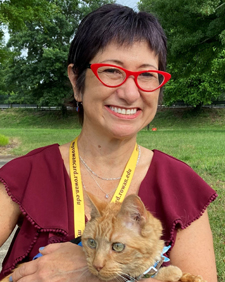
Elena Contreras, DVM, MS, PhD, MANZCVS (Animal Welfare)
Dr. Contreras’s educational research focuses on exploring how animal welfare (and veterinary ethics) education and the incorporation of innovative teaching methodologies such as Visual Thinking Strategies, might shape veterinary students’ attitudes toward animal cognition and welfare, as well as their ability to objectively observe and evaluate animal behavior, assess welfare, and think critically regarding animals' affective states.
[Publications] | [Contact]

Hilari French, DVM, PhD, DACT, DABVP (Food Animal)
Dr. French’s research in veterinary education focuses on enhancing how veterinary educators teach and learn in order to prepare future veterinarians for the complex and evolving needs of the profession. She is particularly interested in innovative approaches to curriculum design, strategies that promote student well-being, and ways to connect clinical skill development with professional identity formation. Through this work, her goal is to create a learning environment that supports student success and strengthens the impact veterinarians have in their communities.
[Publications] | [Contact]
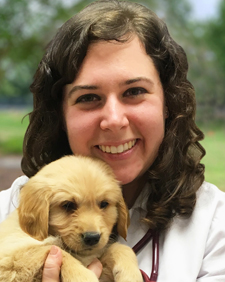
Katie Krebs, DVM, MBA, DABVP (Canine/Feline)
Dr. Krebs researches innovative approaches to preparing future veterinarians for the reality of clinical practice. Her current work examines the integration of business and professional skills training into veterinary curricula, including areas such as practice management, financial literacy, communication, entrepreneurship, and artificial intelligence. Additionally, she studies informational literacy and ways veterinary students find and use information, including both scientific and clinical resources. Collectively, these research efforts aim to bridge clinical education, business acumen, and critical thinking to support the development of more adaptable, well-rounded, and practice-ready veterinary professionals.
[Contact]

Moha Abouhosseini Tabari, DVM, PhD
Dr. Tabari’s educational research explores the benefits of journal clubs for evidence-based learning, highlighting engagement strategies and educational strategies. Her scholarship explores evidence-based teaching frameworks and enhancing critical thinking in veterinary medicine.
[Publications] | [Contact]

Koranda Walsh, VMD, DACVIM (SAIM), DACVP (CP)
Dr. Walsh's scholarly interests lie at the intersection of education, workplace culture, and patient safety. Her work examines how educational structures and practices shape professional environments and safety outcomes, with particular focus on: (1) the delivery of clinical feedback to learners, (2) training programs for staff and students (especially those centered on non-technical skills) and (3) the application of visual training strategies to enhance feedback quality. Ultimately, Dr. Walsh's research is oriented toward leveraging educational interventions as a mechanism for improving workplace culture and patient safety.
[Contact]