One Health Cluster
One Health Cluster
Bridging Human, Animal, and Environmental Health
Cluster Overview
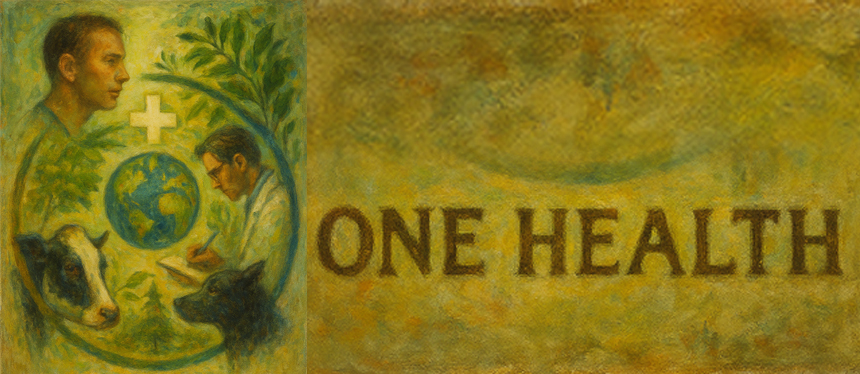
This cluster is built on the One Health principle that recognizes and emphasizes the inextricable interconnectedness and interdependence of animal, human, and ecosystem health. The Integrative One Health Research cluster aims to holistically address global health challenges through cutting edge research, training and outreach. This cluster brings together faculty working on a wide range of impactful topics and with diverse research interests including zoonoses, antimicrobial use and antimicrobial resistance, environmental health among others.
This cluster also supports:
- Collaborative projects across CMSRU, CSM, SOM, Engineering, Social Sciences and Humanities.
- Student (professional and graduate) engagement and mentoring.
- Guest speakers, journal clubs, and pilot grant brainstorming.
Core Research Themes
- Animal models and translational research including clinical medicine needs for interrelationships among health professions.
- Food protection including food security, food safety, food defense, and food production ethics.
- Host–pathogen interactions at the One Health interface.
- Antimicrobial resistance (AMR) and Antimicrobial use (AMU).
- Zoonoses including emerging and re-emerging infectious diseases, environmental health, and public policy.
- Improved diagnostics and vaccines for prevention and control of zoonoses, enabling global health security.
- Comparative and chronic disease research (e.g., cancer, diabetes, neurodegeneration, microbiome).
- Methodologies like omics, imaging, and cross-species data platforms.
Meet the Team

Cluster lead
John E. Ekakoro, BVM, MVMF, PGDip, PhD, DACVPM, MACE
Dr. Ekakoro’s research is focused on the epidemiology of infectious diseases at the One Health interface. He uses epidemiologic methods to identify patterns of occurrence and risk factors for the spread of infectious diseases at the One Health interface to inform prevention, control, and eradication efforts.
Expertise: Epidemiology and Biostatistics, Public Health, Food Safety, Public Policy.
[Publications] | [Contact]

Mohadeseh Abouhosseini Tabari, DVM, PhD
Dr. Tabari’s research focuses on developing and optimizing novel therapeutics for animal and human health. Her work integrates veterinary pharmacology, pharmacokinetics, drug delivery systems, and animal models to identify new therapeutic targets and improve treatment efficacy and safety. She has experience translating mechanistic discoveries into practical, evidence-based therapeutic strategies across veterinary and biomedical applications.
Expertise: Veterinary Pharmacology, Pharmacokinetics, Drug Delivery Systems, Novel Therapeutics
[Publications] | [Contact]
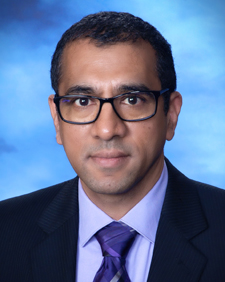
Chandrashekhar (Chandru) Charavaryamath, BVSc, MVSc, PhD
Dr. Chandru Charavaryamath’s research embodies the One Health approach, tackling interconnected health challenges at the human–animal–environment interface. By employing innovative animal models, Dr. Charavaryamath has advanced our understanding of host–pathogen interactions and their relevance to both veterinary and human medicine. His work spans critical areas, including the health impacts of working in swine farms, commensal microbiota, and pathogens such as Klebsiella pneumoniae, Escherichia coli, Mycobacterium avium subspecies paratuberculosis, and Clostridioides difficile. These studies provide valuable insights into disease mechanisms and potential interventions. Through translational models, Dr. Charavaryamath’s research not only elucidates pathogen behavior but also informs strategies to reduce zoonotic risks and combat antimicrobial resistance—reinforcing the principle that human and animal health are inseparable.
Expertise: Respiratory and Neuroinflammation, Host-Pathogen Interactions, Animal Models
[Publications] | [Contact]

Rao Dukkipati, BVSc, MVSc, PhD
Dr. Dukkipati’s research is primarily focused on control and prevention of animal diseases - development of vaccines and diagnostics, and understanding genetic mechanisms underlying production, reproduction and disease resistance/susceptibility traits. Dr. Dukkipati has so far supervised 5 PhD (4 as primary supervisor and 1 as co-supervisor) and 5 Masters (3 as primary supervisor and 2 as co-supervisor) to completion.
Expertise: Immunology, Vaccines, Diagnostics, Molecular Biology, Genetics, Breeding
[Publications] | [Contact]

Arielle Higgins, DVM, MPH
Dr. Higgins is a small animal emergency veterinarian working primarily in clinical practice. She has a Master of Public Health and a strong interest in the epidemiology of zoonotic and infectious diseases. Her prior research experience includes both food animal and companion animal projects mainly centered around vaccine safety and development.
Expertise: Emergency medicine
[Contact]
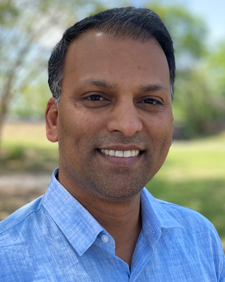
Kallesh Jayappa, DVM, PhD, DABT, DABVT
Dr. Jayappa’s research centers on comparative oncology and the health impacts of persistent environmental toxicants, with a mission to improve both human and animal health through the principles of One Health.
His group investigates cancer across species, leveraging the biological similarities between humans and companion animals to accelerate the discovery of novel therapeutics. This work includes the design and evaluation of innovative small‑molecule drugs, targeted antibody-based therapies, and advanced nanomedicine platforms. Parallel to their oncology efforts, the group investigates the growing threat of persistent environmental toxicants, particularly per- and polyfluoroalkyl substances (PFAS), commonly referred to as “forever chemicals.” Their research examines the extent of PFAS contamination in animals, the bioaccumulation and movement through the food chain, and the adverse health effects of chronic exposure in both animals and humans.
Ultimately, his group aims to confront critical challenges in cancer biology and environmental toxicology under a One Health framework, advancing the health of both animals and humans.
Expertise: Comparative Oncology, Cancer Therapy Development, Nanomedicine, and Toxicology.
[Publications] | [Contact]
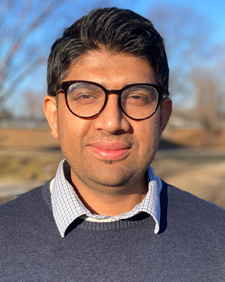
Pratap Kafle, DVM, PhD, DACVM
Dr. Kafle studies the impacts of global change on host-parasite interactions, from local to global scales. His research integrates traditional methods with genomics, AI, and data analytics for parasite detection, ecological modeling, and improved surveillance within a One Health framework.
Expertise: Host-Parasite Interactions, Wildlife Parasitology, Diagnostics, Ecological Modeling
[Publications] | [Contact]
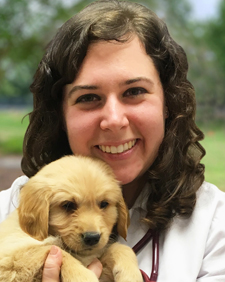
Kaitlyn Krebs, DVM, MBA, DABVP (Canine/Feline)
Dr. Krebs studies honeybee health and the relationship between pollinators and plant ecosystems. She is particularly interested in how factors like disease, pesticide exposure, nutrition, and climate change affect honeybee health, and by extension, plant health and agricultural sustainability. Additionally, Dr. Krebs researches vaccine hesitancy, access to care, and preventive medicine in the small animal space, looking at One Health factors that may impact both animal and human health.
Expertise: Preventive Medicine, Honeybee Medicine
[Contact]

Pam Lough, MLS, PhD
Dr. Lough specializes in interoperability of data from different sources. Her research has facilitated automated reporting on healthcare quality indicators. She works to improve consistency and availability of metadata, which AI uses to generate content, and emphasizes the importance of high-quality metadata for successful predictive analytics. She has collaborated with Kent County Council’s (UK) Department of Public Health to improve interoperability of administrative data used to predict public health needs.
Expertise: Data Management, Interoperability, Public Health.
[Publications] | [Contact]
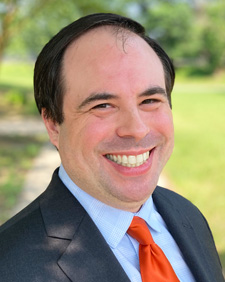
Neil S. Mittelman, DVM, DACVIM (LAIM, Neurology)
Dr. Mittelman is one of only a handful of veterinarians in the world to obtain board certification in both Large Animal Internal Medicine and Neurology. He has a special interest in infectious causes of meningitis and meningoencephalitis and has published on protozoal, parasitic, and toxic causes of neurological disease.
Expertise: Neurology, Internal Medicine.
[Publications] | [Contact]
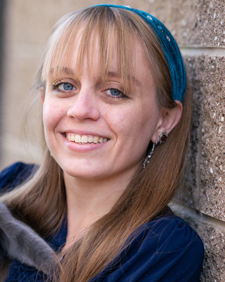
Nora Jean Nealon, DVM, PhD
Dr. Nealon integrates bioinformatics datasets (metabolomics, 16S sequencing, whole genome sequencing, shotgun metagenomics) with clinical metadata to understand the relationships between animal/human hosts and the gut microbiota. Her research focuses on antimicrobial resistance and gastrointestinal disease in domestic animals, with translational relevance to humans. She also uses bioinformatics to develop and screen bioactive products derived from beneficial microorganisms.
Expertise: Microbial Bioinformatics, Bacteriology, Gastroenterology, Probiotics, Antimicrobial Resistance
[Publications] | [Contact]
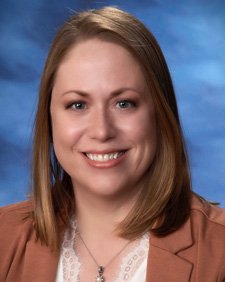
Kirsten White, DVM
Dr. White works in the space between private general veterinary practices and animal shelters. Her work focuses on access to care, contextualized medicine, and the impacts of these concepts on the human-animal bond (HAB) and human and animal wellbeing. Her research interests include how social determinants of health impact people and pets and the evolving role of animal shelters within communities.
Expertise: Shelter Medicine; High-Quality, High-Volume Spay/Neuter; Veterinary Community Engagement; One Health; Veterinary Forensics
[Contact]
Trainees and Collaborators
Viet Linh, DVM, PhD (Postdoctoral fellow, Kafle Lab)
Featured Research Projects
Patterns of Disease Occurrence
Lead: Dr. Ekakoro
Leveraging Animal Disease Diagnostic Laboratory Data to Identify Patterns of Occurrence of Endemic Diseases of One Health Importance.
Food Safety
Lead: Dr. Ekakoro
Synthesizing evidence of the association between Salmonella enterica harborage in cattle at various life stages and Salmonella enterica burden at harvest.
Lead: Dr. Nealon
Comparison of Antimicrobial-Resistant Salmonella enterica in Fresh-Frozen Versus Freeze-Dried Raw Food Products for Dogs.
Environmental Health
Lead: Dr. Kafle
Establishment of a Mass Spectrometry Assay for PFAS Analysis in Biological Fluids and Its Application in Assessing PFAS Exposure in Free-Roaming Cats.
Facilities and Resources
The One Health cluster leverages state-of-the-art wet and dry lab resources, and modern statistical and computational tools to enhance discovery in animal, human, and environmental health.Current Opportunities
Summer Research Experience: Open to veterinary, graduate, and undergraduate students interested in AI applications in diagnostics, molecular bioinformatics, and disease modeling.
Open Positions: Contact faculty for details on available One Health projects.
Contact
For inquiries about research, training, or partnerships, please contact Dr. John E. Ekakoro.