Urgent Care
Urgent Care
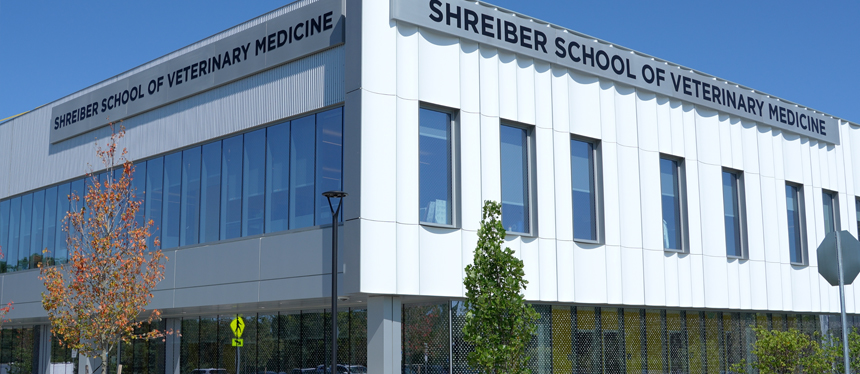
The Urgent Care Service at the Shreiber School of Veterinary Medicine
The Urgent Care Department at the Shreiber School of Veterinary Medicine is dedicated to providing compassionate, high-quality and timely care for sick and injured pets while supporting the education of future veterinary professionals. We strive to create a reassuring and supportive environment for both pets and their families, delivering prompt care. Through a collaborative approach that includes board-certified specialists and emergency veterinarians, we are committed to delivering care that prioritizes comfort and quality of life for every patient.Call Ahead
Call 856-256-6000 (between 8:30am-8:30pm) to let us know you are coming
This is a walk-in service available between 8:30am-8:30pm. No appointment is necessary.
Specialized Care for Dog and Cat Urgent Needs at Rowan University
- We are currently seeing dogs and cats for consultation, examination, diagnostic testing and evaluation. From there, we can guide further options regarding treatment plans, testing and consultations, and next-step recommendations.
- PLEASE NOTE: At this time, we are unable to hospitalize pets - we are working diligently to expand our services, so stay tuned for updates. We do not accept any exotic species through Urgent Care at this time, including pocket pets, rabbits, birds, reptiles, or primates. We also do not accept native wildlife species, including feral wildlife that pose a rabies exposure risk.
- After your visit to Urgent Care, our team can help coordinate follow up appointments for your pet - either through your regular veterinarian, our Primary Care or Specialty services.
Urgent Care vs. Emergency. How Can We Help?
Urgent care typically involves non-life-threatening medical illnesses and minor injuries. Emergencies include more serious injuries, life-threatening illnesses, and pets that are becoming weak or debilitated. In many cases there can be overlap between urgent and emergent cases, or your pet’s symptoms may be vague and require further investigation to understand the root cause.
Our compassionate veterinary team is dedicated to providing you and your pet with timely, high-quality care!
Urgent Care vs. Emergency |
|
Common Urgent Care Needs |
Emergency Cases |
| Limping | Birthing/labor issues |
| Vomiting, diarrhea and/or stomach upset | Hit by car |
| Allergic reactions/hives | Cases requiring transfusions |
| Itchiness or skin issues | Pale gums |
| Minor wounds or lacerations | Collapse |
| Coughing/sneezing | Unconsciousness or profound lethargy |
| Broken nails | Surgical interventions |
| Anal gland issues | Overnight hospitalization needs |
| Ear infections | |
Should I Call Ahead?
Calling ahead is encouraged but not required! In some cases, we may have some pre-visit guidance related to what your pet is coming in for.
If desired, please call 856-256-6000.
What to Expect at Your Visit
On arrival, you'll complete a brief intake form at the front desk. Your pet will be evaluated to obtain a brief history and vitals. Your pet will be seen in either order of illness severity, or order of presentation, dependent on current caseload. The veterinarian will perform a consultation, examination, and discuss recommendations for testing and treatment. You will be updated regarding status and progress of your pet while it is in our care.
Additionally, we will reach out to your primary care veterinarian for records and send the results of your visit with us to them for continued care.
If your pet may be contagious, you may be asked to wait in your car so we can safely bring your pet into a separate area.
Diagnostics and Treatments Offered
We offer a range of diagnostic tests and treatments, including:
- Bloodwork and urine testing
- Blood pressure measurement
- X-rays (radiographs)
- Point of care ultrasound
- ECG (heart monitoring)
- Cytology (microscopic sample evaluation)
We also provide outpatient treatments such as:
- Injections and medications
- Fluid therapy
- Minor procedures (wound repair, urinary catheter placement, etc.)
If needed, we will help coordinate specialty care.
Euthanasia and Aftercare
Our compassionate team is here to support you during difficult decisions. We offer humane euthanasia services and can help guide you through aftercare options for your pet.
Helpful Hints: Toxic Plants and Other Household Dangers
If your pet may have ingested a toxin:
- Do not wait for symptoms
- Call your veterinarian or a poison hotline immediately
- Have the product packaging available if possible
For 24/7 pet poison support:
- Pet Poison Hotline: 855-764-7661 - there is a 1-time fee to speak to the veterinary toxicology team
- ASPCA Animal Poison Control Center: (888) 426-4435 – there is a 1-time fee to speak to the veterinary toxicology team
For a full list of toxins, their severity, and more information, see the Pet Poison Hotline’s online resource: Common Poison List | Pet Poison Helpline®
Or the ASPCA Poison Control website: ASPCA Poison Control | (888) 426-4435 | ASPCA
Common Toxins that Pose a Risk to Pets
Acetaminophen (Tylenol, paracetamol, APAP, Percocet, Panadol, Excedrin, Feverall)
While a common over-the-counter medication for humans, Acetaminophen is rarely prescribed for dogs due to its high side effect potential and is never used in cats as it is highly toxic. Human brands are not formulated for pets and can cause gastrointestinal distress and even liver failure. If you think your pet may have ingested Acetaminophen, please contact a veterinarian and/or a pet poison control service right away.
Non-Steroidal Anti-Inflammatory Drugs (NSAIDs)
Human Examples: Ibuprofen, “Advil”; “Motrin”; Naproxen; Piroxicam; there are many more formulations.
Veterinary Examples: Carprofen (Rimadyl); Meloxicam (Metacam); Piroxicam; Robenacoxib (Onsior)
NSAIDs are common over the counter or prescription medications for humans. There are also veterinary specific NSAIDs that your veterinarian may prescribe for your pet. Over the counter human NSAIDs should never be used in dogs and cats as they can lead to gastrointestinal irritation and ulceration, as well as kidney failure. Veterinary-specific NSAIDs should only be used as prescribed by your veterinarian, as altering the dose or length of treatment can lead to a toxicity, just as if your pet were to ingest human NSAIDs. If your pet ingests any human NSAID, or an incorrect dose of a veterinary NSAID, please contact a veterinarian immediately and call a 24-hour pet poison control service.
Batteries
When a pet chews on or swallows a battery, the alkaline or acidic material inside may leak out and cause corrosive injury to tissue. It is unsafe to make a pet vomit if they have ingested a battery, so be sure to call a veterinarian and/or a pet poison control service right away.
Blue Green Algae (Cyanobacteria)
This algae can be found in New Jersey and is a particular threat to hunting dogs or dogs who hike and swim in natural bodies of water. There is no antidote to this severe toxin and immediate vet care is vital. If you think your pet may have ingested Blue Green Algae, please contact a veterinarian and/or a pet poison control service right away.
Chocolate
The level of danger posed by chocolate ingestion can vary greatly due to different types of chocolate and the amount your pet has eaten. Factors such as the specific ingredients, actual cocoa content, wrappers, and the pet’s size make each case unique in terms of severity. It is recommended to contact poison control so that they may help calculate the risk your pet faces, then contact the hospital to coordinate necessary care.
Lillies
Lillies belonging to the genera Lilium (true lilies) and Hemerocallis, including Asiatic, Easter, Japanese Show, rubrum, stargazer, red, tiger, Western, and wood lilies (Lilium species) and daylilies (Hemerocallis species) are severely toxic to cats. Just biting into or eating the leaves and petals, contact with the pollen, or even drinking the water from the bottom of the flowerpot can cause kidney failure.
Mouse and Rat Poison
This common household item is deadly for dogs and cats but can be especially dangerous as it is formulated to smell enticing, often attracting their attention. There are three main types of rodenticide including anti-coagluant (causes issues clotting blood), Bromethalin (affecting the neurologic system), and types that affect vitamin D and calcium levels in the body. Each type of rodenticide has different toxic doses and they each require very specific treatment strategies. If possible, it is very helpful to have the original package so the exact ingredients and concentration can be determined.
William Allen, DVM
Clinical Instructor, Emergency Medicine
Bio coming soon.
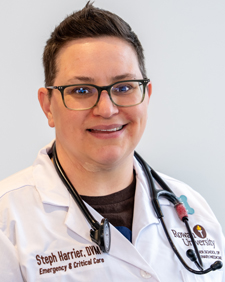
Steph Harrier, DVM
Service Chief, Clinical Assistant Professor, Emergency & Critical Care
Dr. Steph Harrier is the Service Chief and a Clinical Assistant Professor for Emergency & Critical Care at the Shreiber School of Veterinary Medicine of Rowan University. They double-majored in Biology and Chemistry, graduating Cum Laude from Hope College. Following that, Dr. Harrier earned a DVM from Michigan State University before coming to New Jersey to complete a Small Animal Medicine & Surgery Rotating Internship at Red Bank Veterinary Hospital. For the past thirteen years, Dr. Harrier has been in private practice at specialty and emergency hospitals in Philadelphia, three of which were in the role of Emergency Service Head and six as Medical Director.
Dr. Harrier shares a home with a wife and daughter, two cats (Zulu and Barbecue), and a dog named Bellini. In their free time, Dr. Harrier likes to read, maintain flowers from spring to fall, play piano, and weightlift.
Cheryl Harvey, DVM
Clinical Instructor, Emergency Medicine
Bio coming soon.

Arielle Higgins, DVM, MPH
Clinical Instructor, Emergency Medicine
Dr. Arielle Higgins is a Clinical Instructor in the Emergency department. She obtained her BS in Animal Sciences from the University of Maryland in 2013, then graduated Summa Cum Laude from Auburn University College of Veterinary Medicine in 2018. Dr. Higgins continued her education to earn a Master’s degree in Public Health from the University of Minnesota and values a One Health approach to medicine. She completed a small animal rotating internship at Oradell Animal Hospital.
Her special interests include pediatric emergencies, feline urinary obstructions, and polytrauma cases.
Dr. Higgins and her husband have three variably sized dogs and two cats who rule the house. In her free time, she plays in a tennis league, enjoys hiking with the pups, and is an avid reader.

Barbara Maton, DVM, DACVECC
Clinical Assistant Professor, Emergency & Critical Care
Dr. Barbara Maton obtained her Bachelor of Science in Biology from the University of North Florida Magna Cum Laude, and her Doctorate in Veterinary Medicine from the University of Florida Cum Laude. During her studies, she worked as a veterinary nurse in veterinary hospitals including the ICU at the veterinary teaching hospital at the University of Florida. After veterinary school, she completed a heavily emergency-and-critical-care-focused rotating Internship at SouthPaws Veterinary Specialists and Emergency Center in Fairfax, Virginia. Intrigued with Emergency and Critical Care following internship, she accepted a position as an Emergency Doctor at AVETS outside of Pittsburgh, PA, in a busy referral hospital working alongside four Emergency and Critical Care (ECC) specialists and a residency program in ECC. After two years in this saturated environment, Dr. Maton followed her passion in ECC and decided to pursue a residency in Emergency and Critical Care at AVETS, where the program and caseload had proven strong.
Following residency, she joined a referral hospital in Delaware, where she was the first ECC specialist and helped raise the level of medicine and pioneer the ECC service. Since then she has spent years in busy referral practices in NJ developing ECC services, including roles as Medical Director, Chief Medical Officer, and VETCOT Trauma Lead for large leading referral hospitals in New Jersey. She has also led Biosecurity and Protocol teams, as well as educational events for new and established veterinarians. In her work, she has collaborated with other specialists, and developed and grew a new 24-hour specialty referral hospital. Dr. Maton values teamwork, collaboration, a high level of medicine, continued learning, teaching, and strives to encourage that within hospital teams. She also enjoys supporting hospital growth and evolution, including key roles in biosecurity, protocols, hospital certifications, and blood donor programs.
Dr. Maton is excited to join the team at Shreiber School of Veterinary medicine. She is passionate about CPR medicine, electrolyte derangements, trauma, and research, and enjoys hosting wetlabs to encourage hands-on learning and practice. When she is not saving fur-family lives and growing and developing referral hospitals, she has fun with family activities, outdoor activities, gardening, and travelling. She enjoys her home with two vivacious children, supportive husband, retired Labrador, two crazy cats, challenging beta fish, and curious back-yard chickens.
Melanie Repella, DVM, Practice Limited to Critical Care
Clinical Instructor, Emergency & Critical Care
Dr. Melanie Repella, a greater Philadelphia-area native, earned her Bachelor of Science in Animal Science from The Ohio State University before going on to complete her Doctorate in Veterinary Medicine at the University of Illinois. After graduation, she completed a rotating internship at BluePearl in New York City, where the volume of the ER and ICU caseload furthered her interest in critical care medicine and solidified her desire to pursue a critical care residency.
She completed her residency in Emergency and Critical Care at Oradell Animal Hospital, one of the largest private referral practices in the northeast. Her clinical interests include toxin ingestions, polytraumas, transfusion medicine, and CPR medicine. Residency also gave her regular opportunities to work with interns, and she quickly found that teaching, particularly hands-on and case-based, was one of the most rewarding parts of her work.
Joining the Shreiber School of Veterinary Medicine brings those threads together: practicing high-level critical care medicine while helping train the clinicians who will come next. Dr. Repella is usually planning her next trip, trying a new cuisine, working through a stack of books, cheering on the Philadelphia Eagles and The Ohio State Buckeyes, or out on a walk with her dog, Olive. Home is shared with her supportive husband, Olive the Bernese mountain dog, Maisy the spirited calico, and Fred, a cuddly three-legged cat.
What is a DACVECC?
A DACVECC is a Diplomate of the American College of Veterinary Emergency and Critical Care, which is a specialist in Emergency and Critical Care veterinary medicine. They have completed a 3-year residency program, extensive experience and training, published a journal article in the field, and passed a board qualifying examination to obtain credentials as a specialist.